Workshop Tools
Magnetic vs Strap-On Fender Covers
Magnets need steel, and many modern hoods are aluminium. Which cover suits your panel, and why the grit underneath matters more than the fixing method.
Before you buy anythingThis page also considers a clean dedicated towel, a moving blanket and Doing nothing. Why, and when each is the better answer.
Contents
A fender cover exists because belt buckles, tools, forearms and dropped sockets are poor neighbours for paint. The choice is how it stays where you put it, and the answer starts with what your wings are made of.
A note on this comparison: researched from fixing method, panel materials and known failure modes rather than long-term use. See how we test.
Check the panel before choosing anything
Magnets need ferrous steel. A great many modern hoods and fenders are aluminium — chosen for weight — and some panels are composite entirely. On those, a magnetic cover slides straight off and no amount of magnet strength changes it.
Hold a fridge magnet against the wing and against the hood before buying. It is common for one car to have an aluminium hood and steel wings, which means the answer can genuinely differ between two panels a foot apart.
| Magnetic | Strap-on / hood-edge | |
|---|---|---|
| Choose this if | A fridge magnet sticks to that panel | Aluminium or composite panels — or you have not checked |
| Works on aluminium or composite panels | No | Yes |
| Stays put while you lean | Best | Good at the top, can shift lower |
| Repositioning mid-job | Instant — lift and place | Unhook and re-anchor |
| Covers into the engine bay | Only as far as the panel | Usually further, by design |
| Risk from trapped grit | Higher — held under pressure | Lower, but present |
| Encourages dragging | Yes, which is the real hazard | Less so |
| Doubles as a filler indicator | Loosely, on steel | No |
| Suits thin or older paint | Less well | Better |
| Fails by | Not sticking at all, or grinding grit in | Sliding down a raked wing |
No highlight, because the panel material decides this before preference does.
The risk is grit, not the fixing method
Worth restating because the phrasing in most product descriptions misleads.
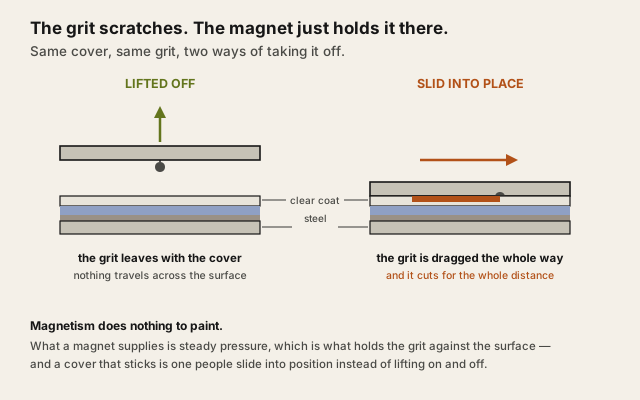
A magnetic field does nothing to a paint finish. Damage comes from ordinary abrasive contamination — sand, brake dust, road grit — caught between cover and paint. The magnet's contribution is twofold: it holds that contamination against the surface under continuous pressure, and it makes sliding the cover into place feel natural.
Which means the failure is preventable and has nothing to do with which type you buy:
- Wash or wipe the panel before the cover goes on.
- Shake and inspect the cover first.
- Place it, never drag it. Lift it away rather than sliding it off.
- Store it folded face-to-face and off the floor.
A cover that lives face-down on a dusty bench is a fine abrasive pad, whatever holds it to the car. The fuller argument is in magnetic fender covers: protection or risk.
This page contains affiliate links. If you buy through them, Ugly Fixes may earn a commission at no extra cost to you. Products are selected independently.
Magnetic fender cover
Test with a fridge magnet first — many modern hoods are aluminium. Clean both surfaces and lift rather than drag.
See current options(opens in a new tab, affiliate link)Affiliate link. Price shown on the merchant's site.
Where each one wins
Magnetic suits a steel-panelled car where you reposition often and want the cover to stay exactly where you put it while you lean across the bay. It is the more convenient of the two every time it works at all.
Strap-on suits aluminium and composite panels, older cars with thinner paint, and anyone who wants coverage that continues down into the engine bay rather than stopping at the panel edge. It is also the type that keeps working when you replace the car.
What neither of them does
Neither stops a dropped tool. A socket falling from head height onto a wing goes through a fabric cover and marks the panel underneath, and no product in this category claims otherwise.
The covers address abrasion and contact — buckles, sleeves, forearms, tools laid down. For anything with mass behind it the answer is not putting it above the panel in the first place, which is what the magnetic tray in small tools that save garage jobs is for.
If this is not right for you
- A clean dedicated towel
- Costs nothing if you already own one, protects against a belt buckle perfectly well, and slides off the moment you lean on it — which is the problem covers exist to solve.
- A moving blanket
- Large enough to cover a whole wing and drape into the bay, cheap, and bulky enough that most people stop bothering to fetch it.
- Doing nothing
- Defensible on a work car or a daily driver whose paint is already marked, where the cover protects a finish nobody is preserving.
Questions people actually ask
How do I know if my car takes a magnetic cover?
Does the magnet damage paint?
Do strap-on covers slip?
Which is better for a classic?
Can a magnet tell me if there is filler under the paint?
How should covers be stored?
Question this page did not answer? Ask it.