Workshop Tools
Stop Using Screwdrivers: Trim Removal Tools
Nylon trim tools are cheap insurance against cracked clips and marked panels. Which shapes matter, why clips are consumable, and the airbag warning first.
Contents
A screwdriver removes trim in the same sense that a brick opens a parcel. It works, and the damage is often visible forever.
Trim-removal tools are boring pieces of shaped nylon, which is exactly the point. They spread load, flex before the panel does, and are cheap enough to keep near the car instead of improvising.
A note on this guide: this rests on how clips are engineered and what marks a panel, not on trim removed here. See how we test.
Why the shape matters
Interior panels are held by clips, tabs and hidden hooks. The job is not brute force; it is getting pressure close to the fastener so the clip releases before the panel bends.
A basic kit gives you different wedge widths and fork shapes. That variety is not decoration. A wide wedge is useful for spreading force across soft trim. A fork is useful when you can get around the clip itself. A narrow pry tool is for starting a gap, not finishing the whole job.
Knowing what is holding it
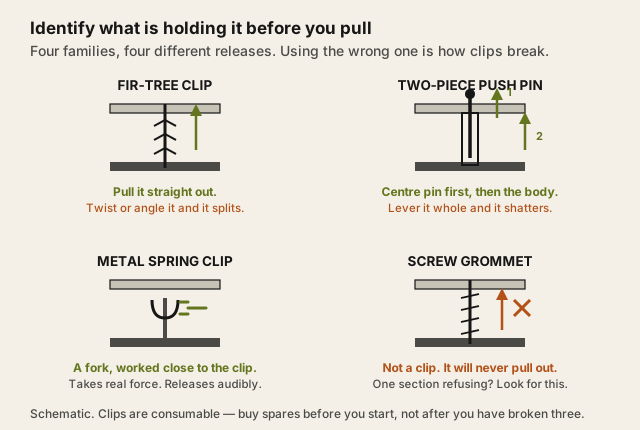
Most interior fixings fall into a few families, and identifying which you are fighting changes the approach:
- Fir-tree or Christmas-tree clips pull straight out. They resist at an angle and split if you twist them.
- Two-piece push pins need the centre pin lifted or pushed first, then the body comes out. Levering the whole assembly without releasing the centre is how these shatter.
- Metal spring clips grip a stud and take real force, usually with an audible release. A forked tool close to the clip is the right approach.
- Screw grommets are not clips at all and will not release however hard you pull. If a section refuses while its neighbours came free, this is the likely reason.
Clips are consumable, so buy spares first
This is the part that turns a one-hour job into a three-day one.
Plastic clips harden with age and take a permanent set in the hole. A proportion of them will break on first removal no matter how careful you are, and that is not a technique failure — it is the material's age.
Order a clip assortment for your car before starting. Discovering you need four clips with the door card already off, on a Sunday, is the actual cost of not doing this, and it is far larger than the clips.
A large kit may include clips, and they are not your car's clips. The 238-piece set this page links is mostly consumables rather than tools — GOOACC's own breakdown is 120 retainer clips, 30 sponge cushions, 20 adhesive cable clips and 20 cable ties against 48 actual tools.
- Tools
- 11 nylon trim removal tools, 1 trim clip removal plier, 11 stainless steel stereo removal tools, 18 stainless steel terminal removal keys, 4 precision hook picks, 2 upholstery fastener removers, 1 foil scraper
- Pieces
- 238, of which 190 are consumables rather than tools
- Storage
- Portable bag included
- Consumables
- 120 car retainer clips, 30 sponge cushions, 20 adhesive cable clips, 20 cable ties
- Paint claim
- GOOACC states the nylon tools will not scratch or damage paint
- Pry tool material
- Impact resistant nylon fibre
- Plier head thickness
- 1-2 mm
Those 120 clips are generic. They are genuinely useful for cable routing and for the common push-pin sizes, and they are not a substitute for the model-specific assortment recommended above — a clip that nearly fits is how a panel ends up rattling. Treat the included clips as a bonus, and order the right ones anyway.
One more caveat on the claim. GOOACC states the nylon tools will not scratch or damage paint, and that is about the tool's own material. It says nothing about grit trapped underneath one, which scratches exactly the way it does under anything else — the mechanism set out in magnetic vs strap-on fender covers.
Temperature does more than technique
Cold plastic is brittle. The same panel that flexes obligingly on a warm afternoon will crack in an unheated garage in January, and no tool compensates for that.
If the work is interior and the weather is cold, warm the car first. It is free and it prevents more damage than any purchase on this page.
This page contains affiliate links. If you buy through them, Ugly Fixes may earn a commission at no extra cost to you. Products are selected independently.
GOOACC nylon trim removal tool kit
GOOACC
A common nylon trim-tool kit. Researched, not tested on original trim.
Check price and availability(opens in a new tab, affiliate link)Affiliate link. Price shown on the merchant's site.
What to buy
Choose a kit with several shapes, not a single heroic pry bar. The useful set includes wide wedges, forked clip removers and at least one slim starter tool. Hard shiny plastic is less desirable than a slightly yielding nylon because the surface contact is harsher.
Do not assume "non-marring" means impossible to mark. Dirt trapped under the tool can scratch, and a tool used like a crowbar can still dent a soft panel. Wipe both the tool and the panel edge before starting — grit between nylon and vinyl is an abrasive.
The technique
Find the clip location if you can, pry close to it, and work progressively around the panel. If one corner needs much more force than the others, stop and look for a hidden screw.
Work in order rather than jumping around: release one clip, move to the adjacent one, and let the panel come away progressively. Levering opposite corners alternately puts the panel itself under bending load, which is what cracks the trim rather than releasing the clip.
Where to go next
For chrome and weatherstrip work, where scratches are even more visible, see clean windshield molding without scratching chrome.
The panel you just removed is usually hiding a cavity that has never been cleaned — see detailing brushes and cleaning gel for the part of the job worth doing while it is open.
For the other small tools in the same category of cheap-and-quietly-essential, see small tools that save garage jobs.
Questions people actually ask
Are plastic trim tools better than metal ones?
Do I need to worry about airbags when removing trim?
Why do clips break even when I do it properly?
Does temperature matter?
What if one corner needs far more force than the others?
Do nylon tools wear out?
Question this page did not answer? Ask it.