Classic Car
Covering a Car for Storage Without Trapping Moisture
A non-breathable cover used long-term can do more harm than leaving the car uncovered — it traps condensation against the paint instead of shedding it.
Contents
A car cover reads as an unambiguous good — dust and sun kept off the paint — and the two most common ways people actually use one both work against that goal.
A note on this guide: this rests on how cover materials handle water vapour, not on covers used over a season here. See how we test.
The problem, as it appears
A cover bought to protect a car that sits, and the suspicion — usually correct — that it might be making things worse.
The symptom is what greets you when it comes off: a damp car under a dry cover, condensation on the glass, and in the worst cases spotting on brightwork that was clean in autumn.
Why "any cover is better than none" is not quite true
A cover that does not breathe traps the moisture a car's paint would otherwise shed through normal evaporation. Over a long storage period, that trapped condensation sits against the finish continuously rather than the intermittent dampness an uncovered car experiences — genuinely worse for the paint in some cases than leaving it exposed. This is the least obvious risk of the two, because a wrapped car looks protected right up until the cover comes off.
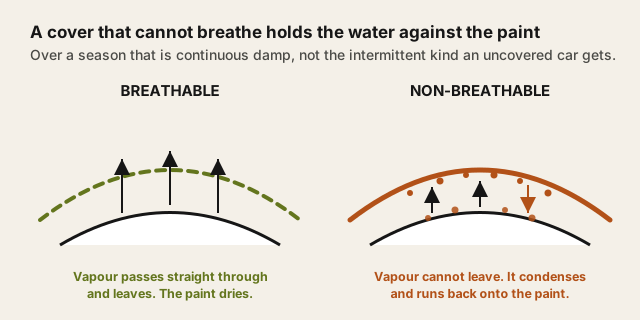
The mechanism is worth being precise about, because "waterproof" and "breathable" are not opposites and a cover can be both. What matters is whether water vapour can leave. A breathable cover lets it pass through and disperse. A sealed one stops it, and since the air under the cover cools overnight faster than the mass of the car does, that vapour condenses on the underside and runs straight back down onto the panel it just left.
What actually matters
Breathability over thickness. A cover's job during long-term storage is shedding moisture, not just blocking dust — a thick but non-breathable cover fails at the part of the job that matters most over weeks or months.
This page contains affiliate links. If you buy through them, Ugly Fixes may earn a commission at no extra cost to you. Products are selected independently.
Full vehicle car cover
Confirm it is genuinely breathable and rated for the storage conditions — indoor vs outdoor is a real spec difference, not marketing language.
See current options(opens in a new tab, affiliate link)Affiliate link. Price shown on the merchant's site.
Fit matters more for long-term storage than short-term use. A loose universal cover flapping in wind rubs against paint over time, marking the finish in exactly the way a proper-fitting, model-specific cover does not. For a car under cover for a season rather than an afternoon, the better fit is worth the extra cost.
Clean the car first. Dust and grit trapped between the paint and the cover acts as a mild abrasive every time the cover shifts, even without visible flapping — the same mechanism as grit trapped under a scraper, just slower and less obvious.
The mistake to avoid
Buying the cheapest universal cover and treating "covered" as the finish line. A non-breathable, poor-fitting cover left on for a season can leave a car worse off than no cover at all — check breathability and fit before assuming coverage alone is doing the job.
This sits alongside the rest of what a classic actually needs during storage — managing fuel and moisture properly and keeping the battery from going flat — and the wider winter storage routine covers how all of it fits together.
Questions people actually ask
Can a car cover actually damage paint?
Is a universal-fit cover good enough?
Indoor or outdoor-rated — does it matter for a garage?
Should the car be clean before covering it?
Question this page did not answer? Ask it.