Detailing & Cleaning
Wheel Brushes That Do Not Scratch the Finish
Brake dust is sharp metallic particulate that embeds in bristles. Which brush suits which finish, and why bare polished alloy needs different chemistry.
Contents
Wheels collect the kind of dirt that punishes laziness: brake dust, grit, tar, and road film tucked behind spokes and around the valve stem. A brush helps because fingers and towels cannot reach those shapes well.
The risk is using a dirty or overly stiff brush and calling the scratches "detailing".
A note on this guide: this rests on what each brush material does against a wheel finish, not on brushes tested here. See how we test.
Brake dust is not ordinary dirt
This is the fact the whole page rests on.
Brake dust is metallic particulate worn off pads and discs, and it is sharp. It frequently lands hot enough to bond lightly to the finish, which is why wheels look grimy again so quickly and why a rinse alone achieves little.
The consequence for tools is severe: that particulate embeds in bristles and cloth fibres and stays there through several rinses. A brush that has cleaned a wheel is contaminated with a fine abrasive, and using it on paint afterwards is closer to sanding than washing.
So the single most important habit is separation — separate brushes, separate cloths, ideally a separate bucket. It is not fastidiousness; it is the difference between cleaning and marking.
Matching the tool to the shape
Wheels are several different access problems wearing one name.
- Barrel brush. Long and flexible, for the inner rim where most of the dust actually sits. The stem must be sheathed — an exposed wire twist will score the barrel every time it flexes.
- Face brush. Shorter and softer, for spokes and the visible face.
- Detail brush. Small, for lug recesses, valve stems and the edges of spokes.
- Tire brush. Stiff, and strictly for rubber. Never let this one near the wheel finish.
A set covering the first three is the sensible purchase. One medium brush used for everything is where both the scratching and the incomplete cleaning come from.
Finish decides the chemistry
Brushes are only half the risk. The other half is what you put on the wheel.
- Painted / clear-coated
- Most tolerant; pH-neutral cleaner is ample
- Machined face with clear coat
- Tolerant while the coat is intact; damaged coat lets alloy corrode
- Powder-coated
- Robust; avoid aggressive acids anyway
- Bare or polished aluminium
- Vulnerable — acids stain and etch, and it will not polish back easily
- Anodised
- Acids strip the anodising; once gone it cannot be restored by cleaning
If you do not know which finish your wheels have — which on an older car with an unknown history is common — treat them as the most vulnerable option and use a pH-neutral cleaner. Nothing is lost by being cautious, and etched alloy is not recoverable.
This page contains affiliate links. If you buy through them, Ugly Fixes may earn a commission at no extra cost to you. Products are selected independently.
Wheel cleaning brush
Soft wheel-brush category. Check finish compatibility and keep wheel tools separate from paint tools.
See current options(opens in a new tab, affiliate link)Affiliate link. Price shown on the merchant's site.
What to look for
Soft bristles, a protected stem, and a head narrow enough for your wheel design. Long flexible brushes are useful for barrels, while smaller face brushes are better around lug holes and valve stems. Keeping one brush for wheels and another for paint is not fussy; it is basic contamination control.
Where the dirt goes matters too
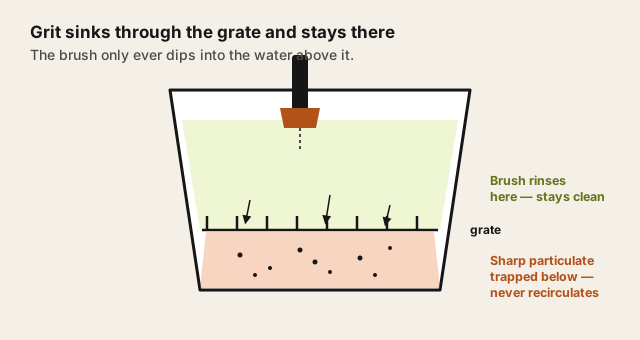
A brush rinsed into the same bucket it draws from is reloading itself with the particulate it just removed.
Grit guard bucket insert
Keeps settled brake dust at the bottom instead of back in the brush.
See current options(opens in a new tab, affiliate link)Affiliate link. Price shown on the merchant's site.
A grit guard traps what settles below a grate so the bristles do not collect it again on the next dip. It costs very little and it addresses the mechanism that actually causes wheel-cleaning scratches, which makes it a better purchase than an upgraded brush for most people.
Where to go next
For drying and wash control on the paint itself, see microfiber drying towels vs old bath towels — the trapped-grit principle is identical and the consequences are more visible.
For the interior version of the same tools, and why the ferrule does more damage than the bristles, see detailing brushes and cleaning gel.
While the wheels are off the ground and you are down there anyway, checking pressures properly is covered in digital tire gauges vs gas station pumps.
Questions people actually ask
Can one wheel brush work for every wheel?
Why is brake dust so damaging?
Should wheels be washed before or after the paint?
Are acidic wheel cleaners safe?
Should wheels be cleaned hot or cold?
What is a grit guard actually for?
Question this page did not answer? Ask it.